Rural and farm fencing around Dubbo
Boundary and paddock fences, stock yards and farm gates for lifestyle blocks, farms and acreage. Get a free measure and written quote from an independent local fencer.
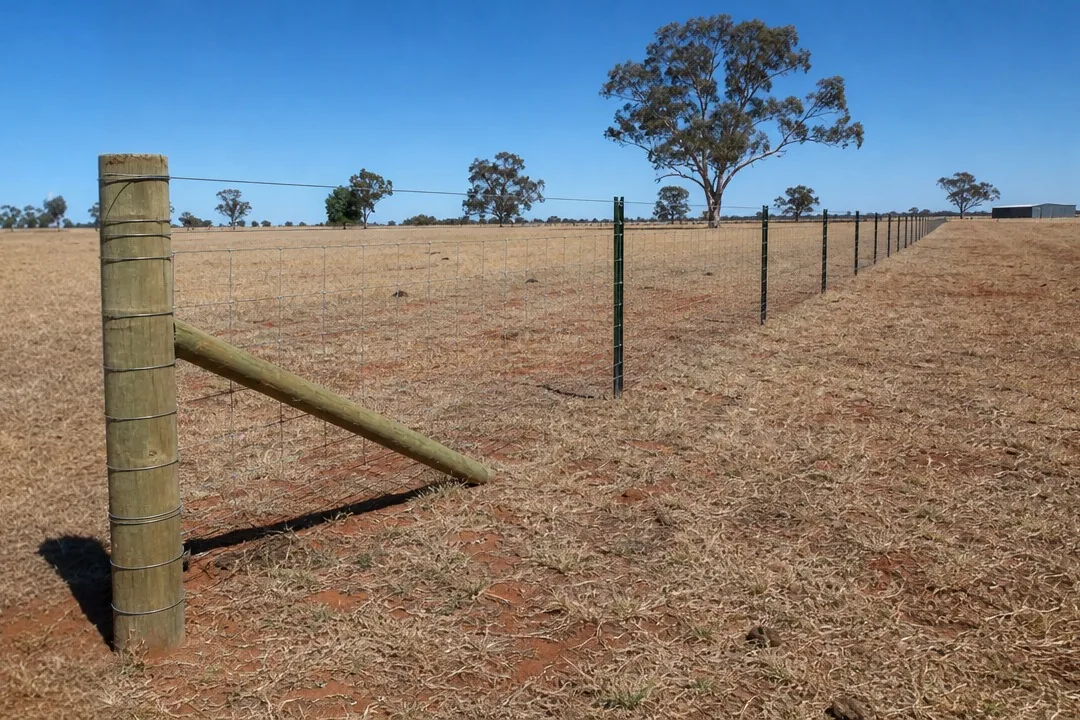
Fencing for blocks, farms and everything in between
Rural fencing around Dubbo covers a lot of ground, from a few hundred metres around a lifestyle block out past Brocklehurst or Wongarbon to kilometres of boundary on a working farm. The right fence depends on what you're keeping in (or out), the ground, and how long you need it to last.
A good rural fencer will walk or drive the line with you, talk through stock and budget, and give you a written price for the whole job, including strainers, gates and any clearing.
Types of rural fence
- Plain and barbed wire: the classic paddock fence on steel posts with timber or steel strainers. Cheapest per metre for long runs, and suits cattle.
- Hinge joint: woven wire mesh with a hinge at each joint, so it gives under pressure and springs back. A common choice for sheep and mixed stock.
- Ringlock: another woven wire mesh that's quick to put up, often topped with a barb or plain wire.
- Electric fencing: on its own or as an offset wire on an existing fence to stop stock pushing through. Solar energisers suit paddocks a long way from power.
- Post and rail: timber or steel rails for horse paddocks and house yards. Easy for horses to see, and good looking.
- Stock yards and laneways: steel panels or rail yards for working sheep and cattle.
- Exclusion fencing: taller mesh fences to keep out kangaroos, wild dogs, foxes or pigs. A bigger investment, priced job by job.
- Farm gates: wide steel gates for paddocks, laneways and the front entrance. See gates.
Things that matter out here
- Strainers: the strainer posts at corners, ends and gateways hold the whole fence tight. Skimping on them is the most common reason a rural fence sags.
- Hard, dry ground: in a dry spell the ground around Dubbo can be like rock. Fencers use post drivers and augers, and the ground conditions affect the price.
- Creeks and flood flats: fences across creeks and low ground get flattened by floodwater and debris. Floodgates, drop-down sections or a different line can save rebuilding after every flood.
- Roos and wildlife: kangaroos test fences constantly. Plain top wires instead of barbs, or the right mesh height, can reduce damage to the fence and the animals.
- Clearing the line: trees, scrub and old wire on the fence line need clearing before the new fence goes up. Ask whether it's included in the quote.
Rough cost
Rural fencing is priced very differently to house fences. As a rough guide from published NSW price guides in late 2026, a basic post and wire fence costs around $12 to $30 a metre for long runs. Hinge joint, ringlock, exclusion fencing, timber post and rail and stock yards cost more.
The biggest things that move the price are:
- the type of wire or mesh, and how many lines
- the number of strainers, corners and gates
- ground conditions, slopes and creek crossings
- clearing the line and removing old fence
- access, and how far the site is from town
A written quote after the fencer has seen the line is the only real price. See the Dubbo fence cost guide for house fence prices.
Neighbours and approvals
The NSW Dividing Fences Act applies to rural boundaries too, so neighbours generally share the cost of a "sufficient" dividing fence. What's sufficient depends on how both properties are used. Legal Aid NSW explains the rules, and the dividing fences guide covers them in plain English.
Under the NSW exempt development rules, post-and-wire and post-and-rail fences up to 1.8 metres in rural zones generally don't need council approval. Taller exclusion fences or other types may. See the NSW Planning Portal page on fences. This is general information, not legal advice.
Common questions
What fence do I need for sheep, cattle or horses?
Very roughly: cattle are usually fine with plain or barbed wire, sheep and goats need a mesh like hinge joint, and horses do best with post and rail or a well-tensioned fence with a sighter wire or electric offset, and no barbs. Your fencer will suggest what suits your stock and budget.
Can a fencer repair fences after a flood or fire?
Yes. A fencer can assess what can be saved, clear the damaged wire and rebuild. If you're insured or eligible for disaster assistance, ask for a written quote that describes the damage.
How do I work out how much fence I need?
A rough figure from a property map or Google Maps is enough to get started. Put it in the "rough length" box on the quote form, and the fencer will confirm it when they see the line.
Will a fencer take on small rural jobs?
Ask anyway. A few hundred metres around a house paddock, a new gate or a stretch of repairs are all worth a quote. If the fencer can't fit it in, they'll tell you.
Get a rural fencing quote
Call now or send a few details, and a local fencer will get back to you to look at the job.