Timber fencing in Dubbo
Paling, lapped-and-capped and timber feature fences, new or replaced. Get a free measure and written quote from an independent local fencer.
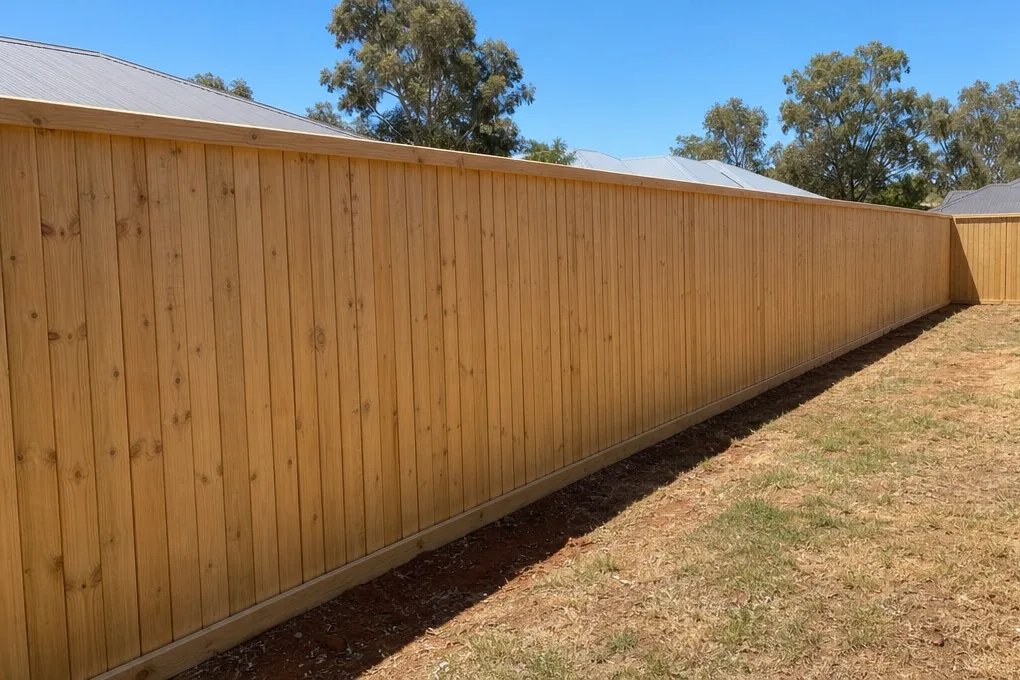
Why people still choose timber
Timber paling fences are still a common sight around older homes, and for good reason. Timber looks warm and natural, sits well with older weatherboard and brick homes, and is easy to patch up: if a few palings crack or a post goes, you fix that bit instead of replacing a whole panel.
It's a good fit if you like the look of wood, want a fence that blends into the garden, or are matching an existing timber fence on the other boundaries.
Types of timber fence
- Butted paling: palings sit side by side on timber rails. The most common and usually the cheapest timber fence. Small gaps can open up as the timber dries.
- Lapped and capped: palings overlap each other so there are no gaps, with a capping rail along the top. More privacy and a more finished look, for a bit more money.
- Feature and screen fences: horizontal boards or slats in timber for front yards, courtyards and screening. These are more of a custom job, so prices vary more.
Choosing the timber
Your fencer will talk you through what suits your block. The common options are:
- Treated pine: the budget choice, treated to resist rot and termites. It looks best when it's stained or oiled.
- Hardwood: heavier, stronger and longer lasting, and it weathers to a silver-grey if left unfinished. It costs more.
- Cypress pine: a native timber grown in inland NSW with natural resistance to termites. Ask your fencer about availability and price.
Posts take the most punishment because they sit in the ground. Some fencers use steel posts with timber rails and palings, which gives you the timber look with posts that won't rot. It's worth asking about, given how heavy Dubbo's clay can be when it's wet.
Timber in Dubbo's weather
Hot dry summers are hard on unprotected timber. Palings can crack, cup and fade without a coat of stain or oil every few years. Termites are active across inland NSW, so treated or naturally resistant timber, and keeping garden beds and mulch off the bottom of the fence, both help. If you'd rather not think about upkeep at all, Colorbond fencing is the low-maintenance option.
Rough cost
As a rough guide, a 1.8 metre timber paling fence costs about $80 to $140 a metre supplied and installed, based on published NSW price guides in late 2026. Lapped-and-capped fences, hardwood and feature fences sit at the higher end or above. For a typical 30 to 50 metres of back and side fence, that's very roughly $2,400 to $7,000, and dividing fences are usually shared with the neighbour.
The price goes up with:
- hardwood or cypress instead of treated pine, or a lapped-and-capped finish
- taking away an old fence, especially fibro
- hard or rocky ground, slopes and tight access
- gates, and staining or oiling the new fence
The written quote is your actual price. See the Dubbo fence cost guide for more.
Repairing an old timber fence
Not every tired timber fence needs replacing. Leaning sections often come down to one or two rotten posts, and loose or broken palings can be swapped out. A fencer can tell you whether a repair will buy you a few more good years or whether it's time for a new fence. See fence repairs.
Common questions
Is timber cheaper than Colorbond?
A basic treated pine paling fence usually costs about the same as Colorbond, sometimes a little less. Hardwood and lapped-and-capped fences usually cost more. Over the years, timber also needs staining and the odd repair, which Colorbond doesn't.
How often does a timber fence need staining?
Every few years in Dubbo's sun is a good rule of thumb, depending on the timber and the product used. Ask your fencer what they recommend for the timber they're using.
What about termites?
Termites are common in inland NSW. Treated pine and naturally resistant timbers like cypress help, as does keeping soil, mulch and garden beds away from the bottom of the fence. If you're worried, ask about steel posts.
Can I replace just one side of the yard?
Yes. A fencer can quote one boundary, a single section or just the damaged part. If it's a shared boundary, have a chat with your neighbour first, as they may be expected to share the cost. The dividing fences guide explains how that usually works in NSW.
Do I need council approval?
Usually not for an ordinary back or side fence up to 1.8 metres in a residential area, but there are conditions. Check the NSW Planning Portal page on fences, and ask Dubbo Regional Council if you're unsure.
Get a timber fence quote
Call now or send a few details, and a local Dubbo fencer will get back to you to measure up.